Why the Best Meditation Habit You'll Ever Build Might Cost You Nothing
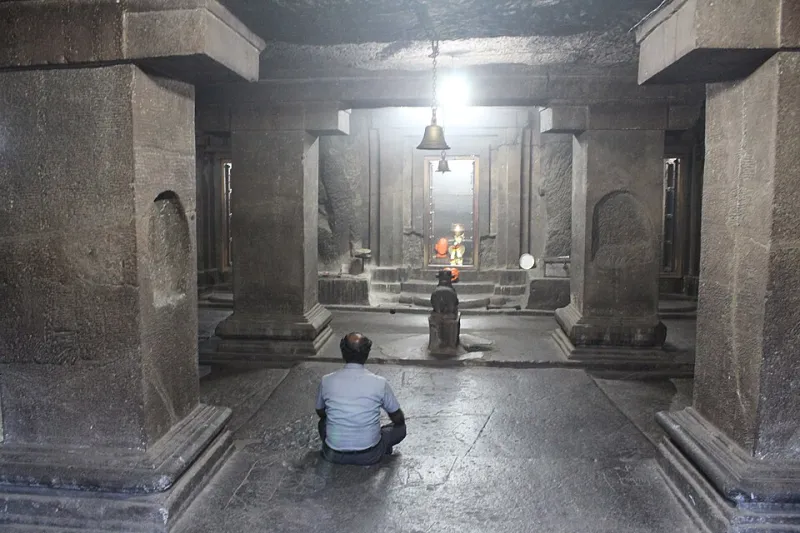
Photo: Haripriya 12, CC BY-SA 4.0, via Wikimedia Commons
There's a certain fantasy attached to the idea of a meditation retreat. You picture yourself somewhere serene — maybe a mountain lodge in Colorado or a beachside wellness center in California — unplugging from your phone, eating clean food, and finally achieving that elusive inner peace. It sounds incredible. It also sounds like it costs about $3,000 for a long weekend.
But here's the thing: for most people, that $3,000 experience doesn't stick. And the science behind why it doesn't stick is actually pretty fascinating.
The Habit Loop Doesn't Care About Price Tags
Neurologically speaking, building a meditation practice works the same way as building any other habit. Your brain relies on a cycle of cue, routine, and reward — and what makes that cycle stick is repetition over time, not intensity in a single moment.
Researchers at MIT and later at Duke University have studied how habits form in the basal ganglia, the part of your brain responsible for routine behavior. Their findings consistently point to one thing: frequency beats magnitude. Doing something small every day does far more for long-term change than doing something big once a month.
A $3,000 retreat is, neurologically speaking, a single data point. A free guided meditation you do every morning before your coffee? That's a pattern. And patterns are what rewire your brain.
The Real Barrier to Meditation Isn't Motivation — It's Friction
Behavioral scientists use the term "friction" to describe anything that makes a behavior harder to do. And when it comes to meditation, premium options are packed with it.
Think about what it takes to attend a retreat: you need to request time off work, arrange childcare, buy a plane ticket, pack a bag, and then actually show up. That's a lot of friction. And even if you love the experience, recreating those conditions on a Tuesday morning in suburban Ohio is basically impossible.
Free meditation apps and online resources, on the other hand, are frictionless by design. They're on your phone. They're available at 6 a.m. or midnight. They don't require a babysitter. Research published in the Journal of Medical Internet Research found that digital mindfulness tools showed strong adherence rates specifically because they removed scheduling and logistical barriers — the exact friction points that cause people to quit.
When something is easy to access, you actually do it. And doing it is the whole point.
Neuroplasticity Rewards Consistency, Not Cost
You've probably heard the term neuroplasticity thrown around a lot in wellness circles. It refers to your brain's ability to reorganize itself by forming new neural connections throughout your life. And it's very real.
Studies out of Harvard Medical School have shown that as little as eight weeks of consistent mindfulness practice can produce measurable changes in the brain — thickening the prefrontal cortex (associated with decision-making and emotional regulation) and shrinking the amygdala (the brain's stress alarm). The key word in all of that research? Consistent. Not intensive. Not expensive. Consistent.
The brain doesn't distinguish between a meditation session guided by a world-renowned teacher at a luxury resort and one delivered through a free app while you sit on your bedroom floor. What it responds to is the regularity of the practice.
The Wellness Industry's Quiet Assumption
There's an unspoken message embedded in premium wellness culture: that transformation requires investment, and the bigger the investment, the more serious you are. It's a compelling story. It's also largely a marketing strategy.
This isn't to say expensive retreats have no value — they absolutely can be meaningful, restorative experiences. But they shouldn't be positioned as the correct or superior path to mental wellness. That framing quietly excludes the majority of Americans, particularly those without disposable income, who may benefit most from accessible mental health tools.
A 2022 survey by the American Psychological Association found that cost remains one of the top barriers to mental health care in the US. When meditation is presented as something that requires a financial investment to "count," it pushes away the very people who need it most.
What Free Actually Gives You
Free meditation resources — guided sessions, breathing exercises, body scans, sleep meditations — offer something retreats genuinely can't: integration into real life. Your real life, with its commute, its difficult coworker, its three kids and one bathroom.
Practicing in your actual environment means you're training your nervous system to find calm in the context where you actually need it. That's not a compromise. That's arguably the more sophisticated approach.
When you meditate for ten minutes before a stressful work call, you're building a direct neural association between the practice and the stress trigger. Over time, your brain starts to reach for calm more automatically in those moments. A retreat can inspire you. But your living room is where the real work happens.
Starting Where You Are
If you've been waiting until you can afford the "right" meditation experience to get started, consider this your permission to stop waiting. The best meditation practice is the one you'll actually do — today, tomorrow, and the day after that.
Free guided sessions, including everything available right here on Free Meditations, are built for exactly this kind of sustainable, everyday practice. No retreat required. No credit card needed. Just you, a few quiet minutes, and a willingness to show up for yourself — consistently, imperfectly, and completely for free.