Doing Nothing Is Actually Doing Everything: The Science of Creativity and Meditation
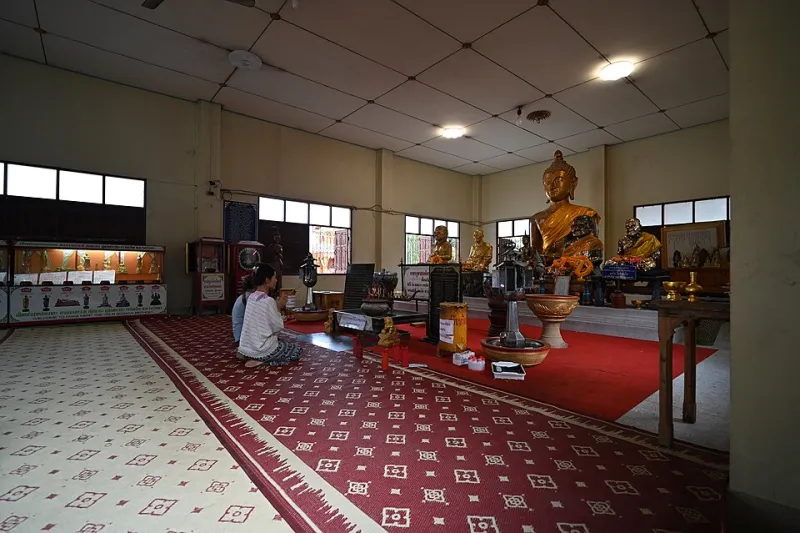
Photo: PattayaPatrol, CC BY-SA 4.0, via Wikimedia Commons
We live in a culture that treats busyness like a badge of honor. If you're not hustling, optimizing, or at minimum answering Slack messages at 11 p.m., you're probably falling behind — or so the story goes. But what if the most productive thing your brain can do is absolutely nothing?
Here's where it gets interesting: neuroscientists have been quietly building a case that the "idle" mind isn't idle at all. And meditation — the kind you can do for free, on your couch, in your pajamas — might be the most underrated creative tool available to everyday Americans right now.
Your Brain Has a Secret Creative Mode
Deep inside your skull, there's a network of brain regions that lights up specifically when you're not focused on a task. Researchers call it the default mode network (DMN), and for years, scientists assumed it was basically background noise — mental static that didn't serve much purpose.
Then the studies started rolling in, and the picture changed completely.
The DMN, it turns out, is the hub of imagination, self-reflection, and creative problem-solving. It's most active when you're daydreaming, letting your mind wander, or sitting quietly without an agenda. It's the part of your brain connecting dots you didn't even know needed connecting — pulling together memories, experiences, and abstract concepts in unexpected combinations.
In other words, it's your brain's innovation lab. And it only really opens for business when you stop demanding something from it.
The Problem With Always Being "On"
Here's the catch: the default mode network and your task-focused attention network essentially take turns. When one is active, the other quiets down. Constant stimulation — emails, notifications, back-to-back meetings, endless scrolling — keeps your task network perpetually engaged. Your DMN barely gets a window to operate.
The result? You might feel productive on the surface while actually starving the part of your brain most responsible for original thinking. Many people describe a strange creative flatness despite being constantly busy. That's not a coincidence.
A 2012 study published in Psychological Science found that participants who engaged in undemanding, mind-wandering activities showed significantly improved performance on creative tasks afterward. The researchers called it the "incubation effect" — essentially, your brain needs downtime to process and recombine information in novel ways.
Where Meditation Comes In
Meditation doesn't just give you a moment of calm. When practiced consistently, it actually changes how your brain transitions between focused attention and open awareness — and that shift has measurable effects on creativity.
A notable study from Leiden University found that practitioners of open monitoring meditation — a style where you observe thoughts without latching onto any of them — performed significantly better on divergent thinking tasks than non-meditators. Divergent thinking is exactly the mental flexibility that drives creative breakthroughs: generating multiple solutions, seeing problems from unexpected angles, making connections across unrelated domains.
Interestingly, focused attention meditation (where you concentrate on a single point, like the breath) showed less of this effect. The open, receptive quality of certain meditation styles seems to be the key ingredient — it mirrors the mental state where the DMN thrives.
You Don't Need a $500 Retreat for This
This is the part that gets lost in the wellness industry's marketing machine. The research doesn't suggest you need a silent retreat in Sedona or a premium app subscription to access these benefits. The brain doesn't care about the price tag.
What it does care about is consistency and genuine mental spaciousness. A simple, free guided meditation practice — even ten to fifteen minutes a day — can begin shifting the way your brain allocates its attention over time. The key is creating a genuine pause: no multitasking, no background podcast, just you and the quiet.
Some practical entry points that cost exactly zero dollars:
- Body scan meditations: Slowly moving awareness through different parts of the body, which naturally loosens the grip of task-focused thinking.
- Open awareness sits: Sitting quietly and simply noticing whatever arises — sounds, sensations, thoughts — without chasing or suppressing anything.
- Breath-anchored wandering: Using the breath as a loose home base while allowing the mind to drift and return organically.
None of these require special equipment, specific beliefs, or any prior experience.
Real-World Creative Payoff
People who build regular meditation habits often report a recognizable shift in how ideas come to them. Rather than forcing solutions through sheer mental effort, insights tend to arrive sideways — in the shower, on a walk, right after waking up. That's not magic; that's the default mode network doing its job after being given enough breathing room to operate.
Some of the most creative minds in American culture — musicians, writers, engineers, entrepreneurs — have described something similar. The common thread isn't genius. It's the discipline to regularly do less so the brain can do more.
The Paradox Worth Sitting With
There's a genuine irony in the fact that one of the most effective things you can do for your creative output is to stop trying to be productive for a few minutes each day. It challenges everything the hustle-culture playbook tells us about how results happen.
But the neuroscience is pretty clear on this one. The brain's most innovative work happens not when it's driven and directed, but when it's given permission to roam.
So the next time someone catches you sitting quietly with your eyes closed and asks what you're doing, you can tell them honestly: you're working on your best ideas yet.
And it didn't cost you a thing.