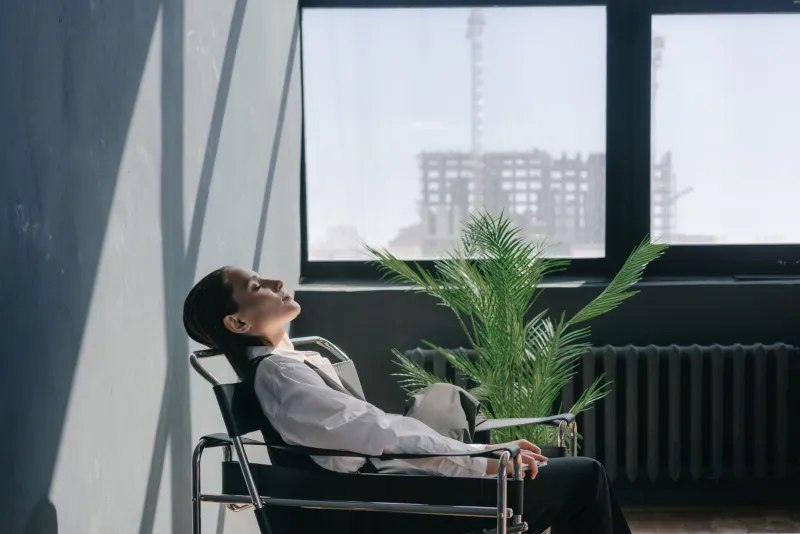
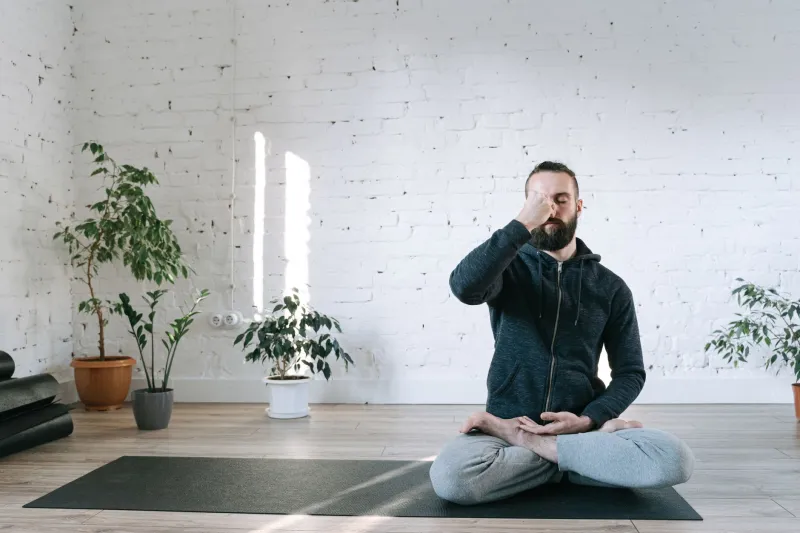
The Morning After a Perfect Meditation: Why the Glow Fades and What to Do About It

You Nailed the Meditation. So Why Do You Feel Kind of... Blah?
It happens to a lot of people. You settle in, close your eyes, and something clicks. The mental chatter quiets. Your shoulders drop about three inches. Time gets soft around the edges. For fifteen, twenty, maybe thirty minutes, you are genuinely, deeply at peace.
And then you open your eyes.
The room looks the same. The to-do list is still there. The dog needs walking, the inbox is full, and that low-grade hum of ordinary life rushes back in like a tide. Except now there's something extra layered on top of it — a strange flatness, almost like a mild grief. The peace you just touched feels like it's already gone, and ordinary reality feels more ordinary than it did before.
Welcome to what some practitioners quietly call the meditation comedown.
Why Your Brain Feels the Drop
Here's the thing: deep meditative states are neurologically real. They're not just "feeling relaxed." During genuinely absorbed meditation, your brain shifts activity patterns — the default mode network (the part responsible for self-referential chatter and mental time travel) gets quieter, while regions tied to present-moment awareness become more active. Some research also points to shifts in brainwave activity, moving toward slower alpha and theta waves associated with calm, creative, and deeply restful states.
When you come out of that state, your brain has to reboot its normal operating mode. That transition isn't always smooth. Think of it like switching from a long, slow walk through a quiet forest to suddenly stepping into a loud, fluorescent-lit grocery store. The contrast itself is jarring — not because the grocery store is bad, but because the gap between the two environments is so wide.
There's also a psychological element at play. When you experience something genuinely good — real stillness, real ease — part of your mind immediately starts cataloging it as something you had and now don't have. That's classic loss aversion doing its thing. The brain is wired to notice what's missing, and the moment that meditative glow starts to fade, the mind can frame it as a problem to solve rather than a natural transition to navigate.
The Compartmentalization Trap
A lot of us — especially in the US, where productivity culture runs deep — end up treating meditation like a separate event. It lives in a specific app, at a specific time, in a specific corner of the bedroom. We step into it, get the benefits, and then step back out into "real life."
The trouble with that mental model is that it sets up a hard wall between meditative peace and everyday experience. The more clearly you separate the two, the more jarring the transition becomes, and the more that post-session emptiness bites.
This isn't a character flaw. It's actually a pretty rational response to how most of us were introduced to meditation — as a practice you do, not a quality you cultivate. But shifting that frame even slightly can change everything about how you feel when the timer goes off.
Practical Ways to Bridge the Gap
Give yourself a landing zone. Instead of jumping up the second your session ends, build in two or three minutes of what you might call a soft landing. Keep your eyes closed or softly downcast. Take a few natural breaths. Let the transition happen gradually rather than abruptly. This isn't wasted time — it's the difference between a smooth runway landing and dropping altitude too fast.
Name what you're carrying. Before you get up, take ten seconds to mentally label what the meditation gave you. Spaciousness. Ease. A sense of being okay. Whatever it was, give it a word or two. Research on labeling emotional states suggests that naming an experience actually helps the brain hold onto it longer. You're essentially tagging it for later retrieval.
Set a micro-intention. Ask yourself: what's one thing I'm about to do, and how can I bring even a fraction of this quality into it? Maybe it's making coffee slowly. Maybe it's saying good morning to someone without half your brain already somewhere else. The goal isn't to stay in meditation mode — it's to let the session season the next ordinary moment rather than evaporate before you reach it.
Notice the echoes throughout the day. Post-meditation flatness often comes from treating the session as the peak and everything after as the descent. Try flipping that. The session isn't the whole point — it's the starting point. Pay attention to the small ways it lingers: a moment of patience that surprises you, a breath you took consciously, a second of genuine presence while you were stuck in traffic. Those aren't consolation prizes. They're the actual fruit.
Don't chase the high. This one's worth sitting with. If you find yourself comparing every session to that one transcendent experience, you're setting up a dynamic that will make every ordinary session feel like a failure. Deep peace isn't a performance you're trying to replicate. Some sessions are profound. Most are just useful. Both count.
The Emptiness Might Actually Be the Point
Here's a reframe worth considering: that hollow feeling after a great meditation? It might not be loss. It might be space.
In a lot of contemplative traditions, emptiness isn't a problem — it's a quality. It's the cleared ground. The flatness you're interpreting as "the glow fading" might actually be a quieter, more sustainable version of what you felt during the session. The fireworks have settled, but the sky is still clear.
The issue is that we're so conditioned to expect emotional experiences to feel like something — warmth, energy, uplift — that quiet clarity can register as nothing. But nothing and spaciousness aren't the same thing.
If you sit with that post-session feeling instead of immediately labeling it as emptiness or loss, you might find something more interesting underneath it. A kind of openness. A temporary loosening of the usual mental grip. That's not a comedown. That's the practice working.
You Don't Have to Choose Between Peace and Real Life
The goal of a meditation practice — especially one you're building for free, on your own time, without retreating to a mountain — was never to create a perfect bubble of calm that pops the moment life shows up. It's to gradually, imperfectly, bring those two worlds a little closer together.
The glow will fade. That's not a problem to fix. But with a little intention, it doesn't have to disappear entirely. It can settle into something quieter and more durable — the kind of ease that doesn't require perfect conditions to exist.
That's the real carry-forward. Not holding onto the peak, but trusting that the practice is changing the baseline — one session, one soft landing, one ordinary moment at a time.